Is My Drama AI, or Is It Made With Real Actors?
My Drama is not best understood as a fully AI-generated video app. It is mainly a short-drama streaming platform that uses real actors in many series, while AI may help with production tasks such as scripts, translation, voices, effects, and character-based features.
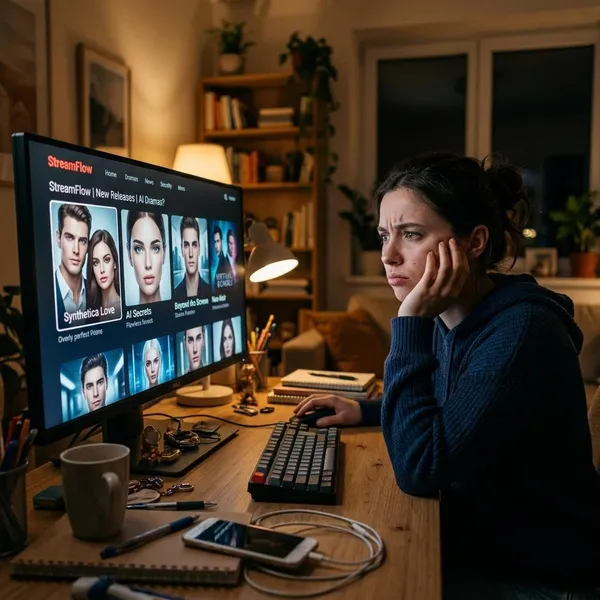
Is My Drama AI?
The honest answer is mixed: My Drama uses AI, but that does not mean every show is created from prompts or that every person on screen is fake. The app sits closer to short-form drama streaming than to a pure AI generator.
My Drama is mainly a short-drama streaming app
The core experience is watching short, serialized episodes on your phone. You browse shows, follow dramatic storylines, and may unlock more episodes as you go. That is a streaming-app pattern, not a video-generation-tool pattern.
Its stories often use familiar short-drama hooks: romance, betrayal, revenge, sudden wealth, secret identities, and cliffhangers. AI may sit behind some of the workflow, but the viewer-facing product is still built around watching stories.
Many series are filmed with real actors
Many My Drama titles appear to use live-action filming and human performers. That matters because "uses AI" and "has no real actors" are not the same claim.
AI can assist parts of the content workflow
AI is most believable as a production helper rather than a total replacement for the whole app. It can support faster writing drafts, translation, voice workflows, generated effects, or promotional assets.
- Most important check: whether a specific series lists real cast members.
- Secondary check: whether the app or official details mention AI features around that title.
- Weakest check: guessing from smooth skin, lighting, or unusual editing alone.
Does My Drama use real actors?
Yes, My Drama uses real actors in many of its short dramas. That is the main reason it should not be described as a fully synthetic video platform.
Human actors appear across My Drama series
Human performances are part of the platform's live-action appeal. Close-ups, emotional confrontations, romantic tension, and fast scene changes all depend heavily on timing and expression, which is why real actors still matter in this format.
Cast names are listed on My Drama
When a title lists cast names, that is one of the clearest signs that the series has a live-action base. It does not prove that no AI was used anywhere, but it does make a "fully AI-generated" label much less likely for that title.
If you are comparing two shows, start with the one that has clearer cast information and official details. For a casual viewer, that is usually enough. For someone concerned about likeness rights, synthetic voices, or AI replicas, the cast page is only the first step.
Live-action filming remains part of production
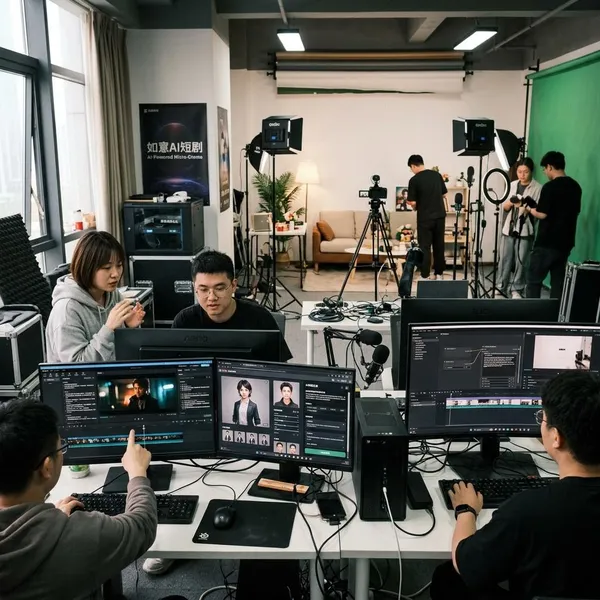
Live-action filming appears to remain part of how My Drama creates many series. Sets, costumes, actors, camera work, and editing give the shows their main shape before any AI-assisted layer is added.
What does My Drama use AI for?
My Drama appears to use AI in the places where short-drama platforms benefit most from speed: story development, localization, audio, effects, and possibly interactive character features. The exact mix can vary by series.
That variation is important. One title may only use light AI support, while another may lean more heavily on AI dubbing, generated media, or character extensions. Broad claims like "everything is AI" or "nothing is AI" miss the point.
Script and story assistance
AI can help with story ideas, outlines, scene variations, cliffhanger options, and adaptation work. That does not mean every episode is written automatically. Short dramas still need human choices about pacing, emotional payoff, and what will make viewers tap the next episode.
The risk is sameness. If a platform leans too hard on AI drafts without strong editing, plots can feel interchangeable: the same betrayal, the same reveal, the same romance beat. Human review is what keeps a fast production pipeline from becoming flat.
Localization and translation
Translation is one of the most practical AI uses for a mobile drama app. Short dramas can travel quickly across markets if subtitles, captions, promotional copy, and sometimes dubbing are adapted fast.
For viewers, this can mean more shows available in more languages sooner. The trade-off is that AI-assisted localization can sound stiff if no one fixes the emotional tone, jokes, or cultural phrasing.
Voice and audio generation
AI voice tools may be used for dubbing, testing, localization, or interactive character features. That does not mean every voice you hear is synthetic.
Visual effects and generated media
AI can make expensive or difficult visuals easier to produce. A short-drama team might use generated or AI-enhanced media for a dangerous effect, a fantasy background, a dramatic insert, or promotional images.
How does My Drama combine AI and human production?
My Drama's likely model is hybrid production: people create, perform, review, and assemble the drama, while AI speeds up selected steps. That is different from a fully automated system where software generates the whole series from beginning to end.
Writers shape the story
Writers and editors still matter because short dramas need sharp hooks. A good episode has to set up conflict quickly, end at the right moment, and make the next episode feel urgent.
AI can suggest options, but someone still has to decide which twist fits the character, which scene is worth filming, and which emotional beat should not be rushed.
Actors perform the characters
Actors give the characters a face, attitude, rhythm, and emotional presence. That is especially important if the app later offers a chat-style extension of a character, because the viewer's attachment usually starts with the filmed performance.
AI speeds up selected production tasks
The strongest role for AI is efficiency. It can reduce time spent on repetitive or costly parts of production without replacing the entire creative process.
- Before filming: draft ideas, outline support, adaptation notes.
- After filming: subtitles, dubbing support, audio cleanup, effects.
- After release: character chat, localized assets, promotional variations.
Editors assemble the final episodes
Editors are the people who make the hybrid process feel watchable. They choose the pacing, cut weak moments, blend audio and visuals, and decide whether any AI-assisted element fits the episode.
For a viewer, this is often the invisible part. You may not know which shot was enhanced or which subtitle began as an AI draft; you just notice whether the episode feels smooth, awkward, cheap, or convincing.
How to tell if a My Drama series uses AI
You usually cannot prove AI use from one clip. Short dramas can look artificial because of filters, lighting, fast editing, low budgets, or aggressive dubbing, even when the footage is live action.
A better approach is to check the human evidence first, then look for AI clues. That gives you a more reliable answer than trying to spot odd hands or smooth faces frame by frame.
Check the cast page
Start with the cast page or title details. Named actors are the strongest quick sign that the series has a live-action foundation.
If you only want to know whether the people on screen are real, this may be enough. If you want to know whether AI voices, effects, or chat replicas are also involved, keep checking.
Look for production credits
Credits can point to writers, producers, actors, dubbing teams, editors, or technical contributors. More complete credits usually suggest a more traditional production workflow.
Missing credits are not proof of AI generation, though. Some mobile drama apps simply provide less metadata than larger streaming services.
Review official series details
Official descriptions can reveal whether a series is promoted as a live-action drama, an adapted story, an actor-led title, or a character with interactive AI features.
Avoid judging from visuals alone
Visual clues are easy to overrate. Heavy filters, strange lighting, compressed video, awkward dubbing, and fast mobile editing can all make real footage look "AI-ish."
- Check cast names first. Real performers are the clearest sign of live-action production.
- Read official details next. Look for mentions of actors, adaptation sources, or AI features.
- Use visuals as a clue only. Odd motion or glossy effects can support a suspicion, but they should not be the whole verdict.
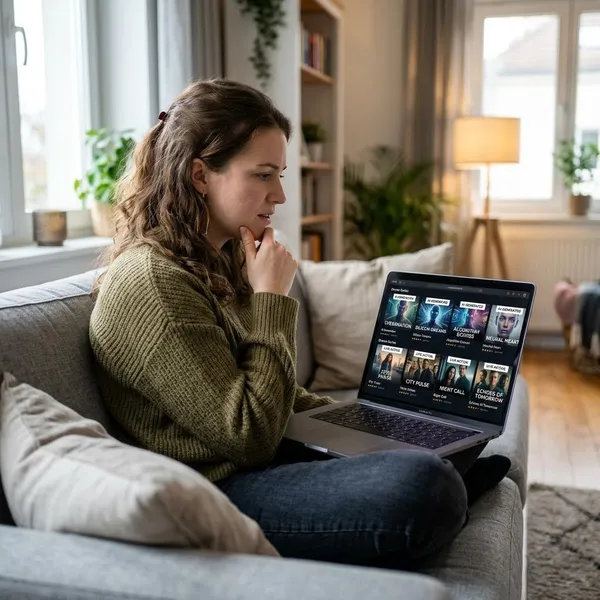
Conclusion
My Drama is best treated as a short-drama streaming app with AI-assisted production and interactive features, not as a fully AI-generated video platform. If you are deciding whether a series feels "real enough" to watch, check the cast and official details first; if your concern is synthetic voices, likeness use, or generated effects, judge each title separately instead of assuming the same answer applies across the whole app.