Are Drama Shorts AI-Generated or Made With Real Actors?
Not all drama shorts are AI, and the safest answer is: check the specific show before assuming. Many short dramas are filmed with real actors, some only use AI for dubbing or subtitles, and a smaller but growing group is fully generated with synthetic characters, voices, and scenes.
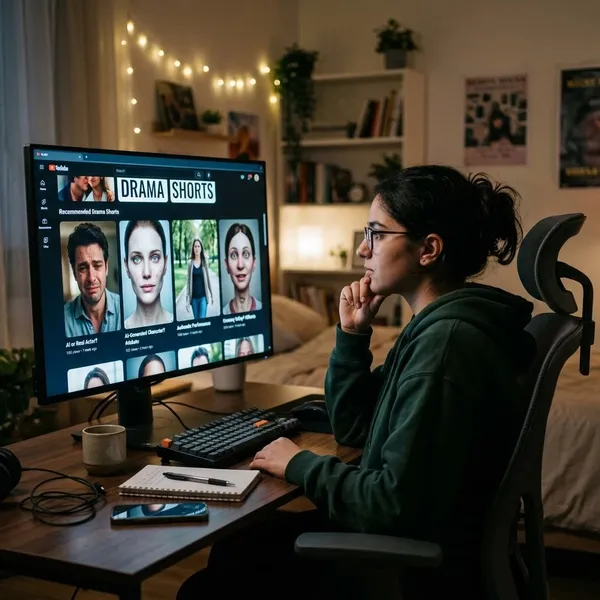
Are drama shorts AI?
Drama shorts now sit on a spectrum. One series may be a normal low-budget shoot with actors and real locations, while another may use AI voices, translated subtitles, generated backgrounds, or fully synthetic video. The first thing to check is not whether the category is AI, but which part of the production looks automated.
Many are filmed with real actors
A large number of drama shorts are still traditional live-action productions, just made quickly and cheaply for mobile viewing. Romance, betrayal, revenge, family conflict, and workplace power stories often rely on real expressions and body language because those details are hard to fake convincingly.
Some use AI behind the scenes
Many short dramas are better described as AI-assisted. The actors and footage may be real, but AI can help with background noise removal, subtitle timing, translated captions, dubbed voices, teaser clips, and promotional images.
This is the middle case viewers often miss. For example, a series filmed in one language may be released in another market with AI-generated dubbing. The acting is real, but the voice you hear may not be the original actor's voice.
Some are fully AI-generated
Fully AI-generated short dramas are becoming more visible, especially in genres that are expensive to shoot in real life. Fantasy settings, supernatural plots, luxury interiors, futuristic scenes, and exaggerated transformation stories are easier to build with prompts than with sets, costumes, and locations.
The weak spots are usually close-ups and emotional scenes. Watch for faces that subtly change between cuts, lip-sync that drifts, hands that look wrong, jewelry or clothing that shifts, and voices that sound smooth but emotionally flat. One small mistake is not proof, but several of these signs together make AI generation more likely.
What does AI do in short dramas?
AI is not used for only one thing. In short dramas, it can help create visuals, generate speech, translate dialogue, clean up edits, and package a series for different platforms. For viewers, the most practical way to judge a show is to separate what you see on screen from what may have happened in post-production.
Generate characters and scenes
AI tools can generate characters, outfits, backgrounds, and video scenes from written prompts. This can be useful when a creator wants a palace, mansion, sci-fi city, dramatic storm, or fantasy transformation without paying for locations and visual effects teams.
The main challenge is consistency. A polished AI short drama needs the same character to keep the same face, age, hairstyle, and proportions across multiple scenes. When those details keep changing, the production starts to feel synthetic even if the overall image looks impressive at first glance.
Create voices and dubbing
Voice generation and dubbing are among the most common AI uses in short dramas. A platform can take one series and create English, Spanish, Portuguese, Hindi, or other versions much faster than booking a full voice cast for every market.
This is why a show can feel "AI" even when the video itself was filmed with real people.
Translate dialogue and subtitles
AI translation helps short-drama apps move a successful title into new regions quickly. It can draft subtitles, convert dialogue for dubbing, and prepare different language versions without starting the production again.
The catch is tone. AI subtitles may be accurate enough to follow the plot but still feel too literal, too formal, or strangely phrased. If the emotional scene is clear but the captions sound unnatural, the issue may be automated translation rather than AI-generated acting.
Support editing and visual effects
AI can support editing by cleaning audio, removing background distractions, improving lighting, reframing footage for vertical screens, smoothing transitions, or creating quick trailers and posters. These uses are usually invisible unless something goes wrong.
For a small studio, this can make the difference between releasing one polished version and preparing several versions for different apps or languages. For a viewer, it means "AI was used" does not always equal "the whole drama is fake."
Why are AI short dramas becoming more common?
AI fits the short-drama business because the format rewards speed, volume, and quick localization. Platforms need many episodes, frequent new titles, and fast testing of plots that might catch attention in the first few seconds.
Faster production
Short dramas move quickly because trends burn out fast. If hidden identity, contract marriage, billionaire romance, or revenge plots are performing well, creators want new versions ready while people are still watching that style of story.
AI can shorten the time between idea and release. It can help draft scenes, prepare subtitles, generate temporary voice tracks, create thumbnails, or test promo clips before a team invests more effort.
Lower production demands
A filmed drama needs actors, locations, lighting, sound, costumes, schedules, and editing. Even a basic vertical series can become complicated when it runs across dozens of short episodes.
AI lowers the barrier for smaller teams. A solo creator might use AI for synthetic voices and scene generation, while a low-budget studio may keep real actors but use AI for cleanup and localization. The trade-off is quality control: the cheaper workflow still needs human judgment, or the result can look rushed and generic.
Easier localization
Localization is one of the clearest reasons AI is spreading in short dramas. If a series works in one country, the platform can use AI to prepare subtitles, rewritten dialogue, and dubbed voices for another audience quickly.
More content at scale
Short-drama apps depend on constant new material. Viewers may watch many tiny episodes in one sitting, so platforms need fresh hooks, fresh characters, and fresh cliffhangers all the time.
AI helps scale repeatable formats. That is useful for platforms, but it can also create a downside for viewers: more shows may start to feel interchangeable. If every title uses the same plot beats, similar voices, and similar AI-made posters, the content may be faster to produce but less memorable.
Are DramaShorts shows AI-generated?
DramaShorts-style platforms should not be treated as automatically AI-generated. Some titles may be live action, some may be AI-assisted, and some may use more synthetic elements. Without clear title-by-title disclosure, it is safer to judge the individual show rather than the whole app.
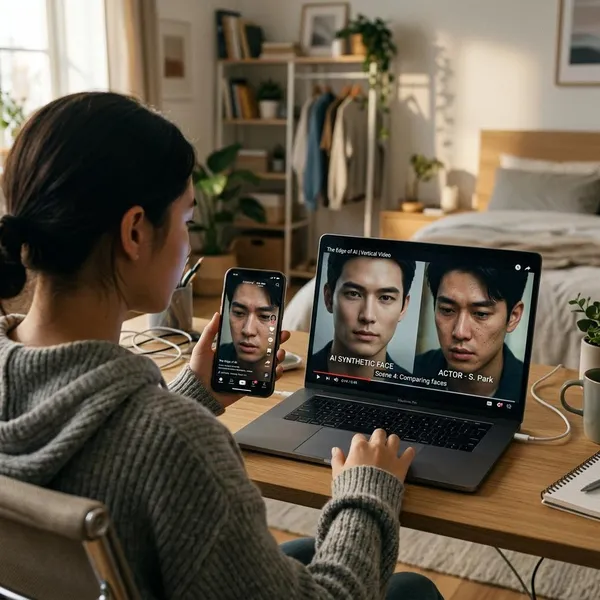
DramaShorts includes vertical short-form series
DramaShorts belongs to the broader world of vertical short-form drama: short episodes, mobile-first framing, fast pacing, cliffhangers, and emotionally direct plots. That format existed before generative AI became common.
A vertical layout or dramatic thumbnail is not enough to prove AI use. Many of these series are simply built for phone screens, with tight close-ups and quick cuts to keep viewers watching.
Not every title should be assumed to be AI
The better approach is to look for a cluster of signs. Start with the credits or app description, then check the face consistency, lip-sync, voice quality, background details, and subtitle style. If only one detail feels off, it may just be low-budget production.
- Check the credits: named actors and behind-the-scenes material usually suggest a live-action base.
- Watch close-ups: shifting facial features, odd blinking, or warped teeth can point to AI video.
- Listen to the voices: flat emotion or overly clean audio may suggest AI dubbing.
- Compare scene details: changing hands, jewelry, clothing, or background objects can be a warning sign.
Conclusion
Drama shorts are not one single thing anymore: some are real productions, some are AI-assisted, and some are fully synthetic. If you want the most reliable answer, judge the specific title by its credits, voice quality, visual consistency, and how much of the performance feels human. The fair middle ground is to assume AI may be involved, but not to assume every short drama is fake.