What Does a ReelShort Scriptwriter Actually Do?
A reelshort screenwriter writes short, high-emotion drama scripts built for vertical mobile viewing. The job is less about slow cinematic setup and more about making every episode land quickly: a clear conflict, a strong emotional turn, and a reason to watch the next part. If you want to write for this format, the first thing to check is whether your samples prove pacing, romance tension, and cliffhanger control—not just general writing ability.
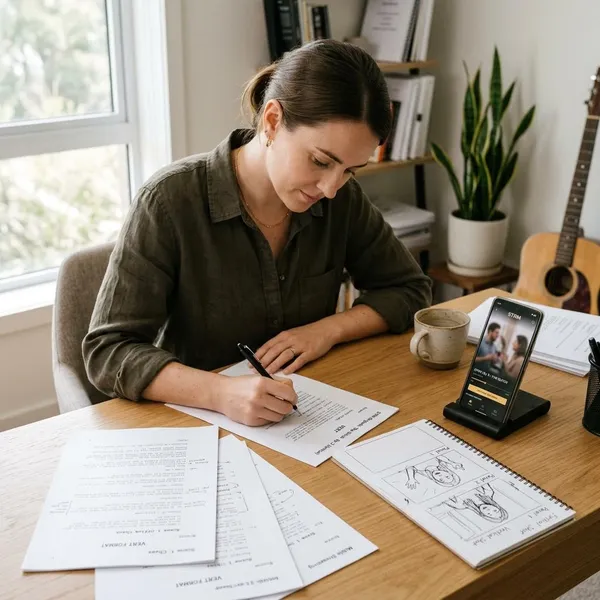
What is a ReelShort screenwriter?
A ReelShort screenwriter develops scripts for short-form vertical drama, often with episodes designed to be watched in quick bursts on a phone. The format favors immediate stakes: betrayal, hidden identity, public humiliation, secret marriage, family pressure, revenge, or a romance that keeps getting blocked at the worst possible moment.
A vertical drama writer
Vertical drama writing starts close to the emotional problem. A scene may open with an accusation, a breakup, a reveal, or a character being cornered, because viewers need to understand the conflict almost immediately on a small screen.
Scriptwriter for short episodes
Short episodes leave very little room for warm-up dialogue. Each episode should usually do one clear job: expose a lie, deepen a romance, create a misunderstanding, force a choice, or reverse what the viewer thought was true.
Original and adapted storytelling
Some projects begin with a new concept, while others come from web novels or digital fiction. Original work needs a hook that can be understood fast. Adapted work needs careful trimming so the story does not feel like a novel summary squeezed into short scenes.
Part of the creative team
A ReelShort writer rarely works in isolation. Producers, head writers, directors, editors, development teams, or platform-side notes may all shape the final script. That means being good at revisions is part of the job, not a separate skill.
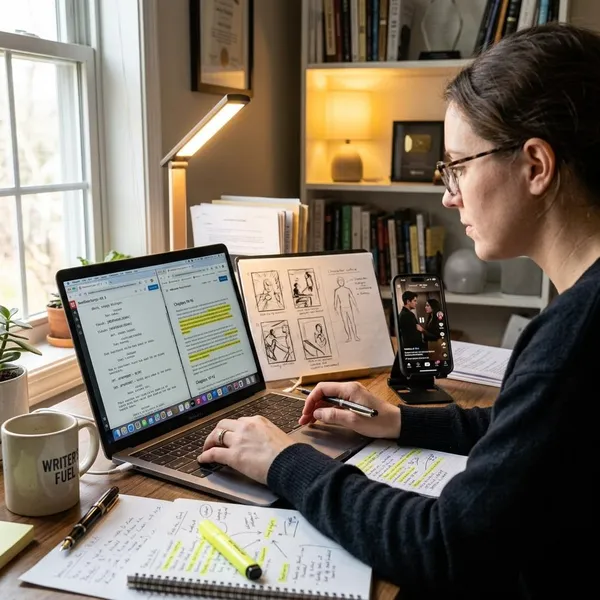
How are web novels adapted for ReelShort?
Web novels are usually adapted by keeping the central fantasy and rebuilding the plot for faster visual payoff. A novel can spend chapters on inner thoughts, side characters, and slow-burn tension. A vertical drama has to make the emotional pressure visible much sooner.
Find the core romance
The core romance is the relationship that gives the story its emotional pull. It might be enemies to lovers, contract marriage, reunion after betrayal, secret identity romance, or a relationship divided by family status.
Cut slow subplots
Slow subplots are not cut because they are bad; they are cut when they delay the main emotional payoff. A workplace rivalry, family backstory, or side romance can stay only if it increases pressure on the central relationship or main conflict.
Simplify the cast
A smaller cast helps viewers track the story quickly. Two minor rivals may become one stronger antagonist. A friend, assistant, or sibling may absorb several support functions from the novel.
Move conflict earlier
Conflict often moves into the first few episodes. If the novel waits a long time to reveal a secret child, a false accusation, a stolen identity, or a humiliating rejection, the adaptation may bring that event forward so viewers understand the hook quickly.
The risk is moving too much too soon. Early conflict still needs emotional logic. A shocking reveal works better when the viewer knows exactly who is hurt, who benefits, and why the next episode matters.
Break the story into episodes
After the main material is chosen, the writer breaks it into episode beats rather than chopping the novel into equal pieces. Each episode needs a turn, not just a slice of plot.
Strengthen each cliffhanger
A good cliffhanger is not just a random surprise. It should create a specific question the viewer wants answered immediately: Did she hear the truth? Will he sign the contract? Has the villain found the evidence? Is the lead about to choose the wrong person?
What skills do ReelShort writers need?
ReelShort writers need commercial instincts, emotional precision, and the ability to write under tight structure. The format looks simple, but it punishes vague motivation, slow openings, and scenes that only explain what the audience already understands.
Romance writing
Romance writing matters because many vertical dramas use the relationship as the main reason to keep watching. The writer needs to understand chemistry, denial, jealousy, sacrifice, vulnerability, and delayed payoff.
Fast story pacing
Fast pacing means entering scenes late and leaving on a turn. It does not mean throwing constant events at the viewer with no emotional cause.
- Start later: skip the walk into the room; begin when the accusation lands.
- Cut filler: remove greetings, repeated explanations, and soft setup lines.
- Track the change: every scene should alter power, trust, danger, desire, or information.
Adaptation skills
Adaptation skill is the ability to preserve impact while changing form. A web novel may rely on memory, narration, inner conflict, or long anticipation. A script has to externalize those feelings through behavior, dialogue, and scene pressure.
Character development
Character development has to happen quickly but not lazily. A lead can become memorable through one revealing choice: refusing money, hiding pain, protecting the wrong person, or staying silent when speaking would be safer.
Villains and rivals need the same care. If every antagonist only sneers and insults, the story becomes repetitive. Give them a clear desire, a pressure point, or a reason they can hurt the lead at exactly the wrong moment.
Serialized storytelling
Serialized storytelling means each episode answers one question while opening another. The audience should feel progress, not just repeated humiliation or repeated misunderstandings.
Collaborative rewriting
Collaborative rewriting is where many writers either become more valuable or harder to hire. You may be asked to shorten a scene, combine two characters, move a reveal earlier, or make the romantic lead less cold without weakening the conflict.
Who writes ReelShort stories?
ReelShort stories are usually shaped by several kinds of writers and creative staff. One person may draft the pages, but the final version often reflects notes from producers, head writers, adaptation specialists, and development teams.
Contract screenwriters
Contract screenwriters are freelancers hired for a specific script, rewrite, pilot batch, or adaptation job. This can be a realistic entry point if you already have samples that match the tone and structure of short-form romance or melodrama.
The downside is that freelance work can be irregular. A writer who wants steadier opportunities should keep building samples, contacts, and related credits instead of relying on one assignment.
Studio writers
Studio writers work closer to the company's development system. They may draft, revise, punch up cliffhangers, or adjust stories to match platform preferences.
Head writers
A head writer usually protects the overall shape of the series. They may build the outline, guide other writers, rewrite key episodes, and keep the tone consistent across the run.
This role is especially useful when several writers touch one project. Without a clear lead, short-form drama can drift: the pacing changes, character motives blur, or the middle episodes repeat the same conflict.
Adaptation writers
Adaptation writers specialize in turning source material into screen-ready episodes. They decide which plotlines carry the emotional promise and which details will slow the screen version down.
Creative producers
Creative producers may shape the concept, audience target, twist structure, and revision direction. They might not write every page, but their notes can strongly affect what the final story becomes.
For writers, the practical takeaway is to expect story conversations, not just script delivery. If a producer asks for a bigger opening hook or a clearer romantic payoff, the goal is usually to make the project easier to sell, shoot, or retain viewers.
How to become a ReelShort screenwriter
To become a ReelShort screenwriter, build evidence that you can write the actual format. A standard feature script or TV pilot can show ability, but it may not show that you understand vertical drama, short episodes, romance hooks, or adaptation pressure.
Build screenwriting experience
Start with any work that teaches scene craft: short films, web series, spec scenes, indie productions, or adaptation exercises. The goal is to practice structure, dialogue, tension, and revision—not just to collect titles.
If you are new, keep the projects small enough to finish. A complete five-episode sample with strong turns is usually more useful than a huge unfinished concept.
Learn vertical drama
Watch current vertical dramas with a notebook, not just as entertainment. Track when the first conflict appears, how often the power dynamic changes, and what kind of beat ends each episode.
Study romance storytelling
Study romance as structure, not just mood. Pay attention to why the couple cannot be together yet, what each person misunderstands, what sacrifice proves love, and what payoff the audience is waiting for.
Prepare strong writing samples
Your sample should make the format obvious within the first pages. Open with conflict, keep dialogue direct, make the emotional stakes readable, and end the sample with a strong next-step question.
Do not submit only slow literary drama unless the job asks for it. A hiring team looking for short-form serialized romance needs to see that you can write pressure, reversals, and hooks without a long runway.
Include a romance sample
A romance sample is worth including because it matches a large part of the vertical drama market. It does not have to be gentle or predictable; betrayal, revenge, class tension, celebrity scandal, and secret marriage can all work if the relationship remains central.
Make sure the sample shows desire and conflict at the same time. If the couple only argues, there is no pull. If they only admire each other, there is no engine.
Watch current job openings
Look beyond the exact phrase "ReelShort writer." Relevant roles may be listed as short-form screenwriter, adaptation writer, romance writer, serialized drama writer, story editor, or development writer.
- Search broadly: check job boards, LinkedIn, company career pages, and entertainment newsletters.
- Match the sample: send the most relevant piece, not the one you personally like most.
- Read the posting carefully: adaptation jobs and original writing jobs may need different samples.
- Keep networking practical: producers and other writers are more likely to respond when your work already fits the format.

Conclusion
A strong ReelShort writer is not just a fast writer; they know how to choose the emotional center, cut what slows it down, and build episodes that keep changing the viewer's question. If you want to move toward this work, focus first on format-specific samples, romance tension, and clean adaptation choices. General screenwriting skill helps, but the writers who stand out are the ones who can make a short mobile episode feel urgent without making it feel careless.